
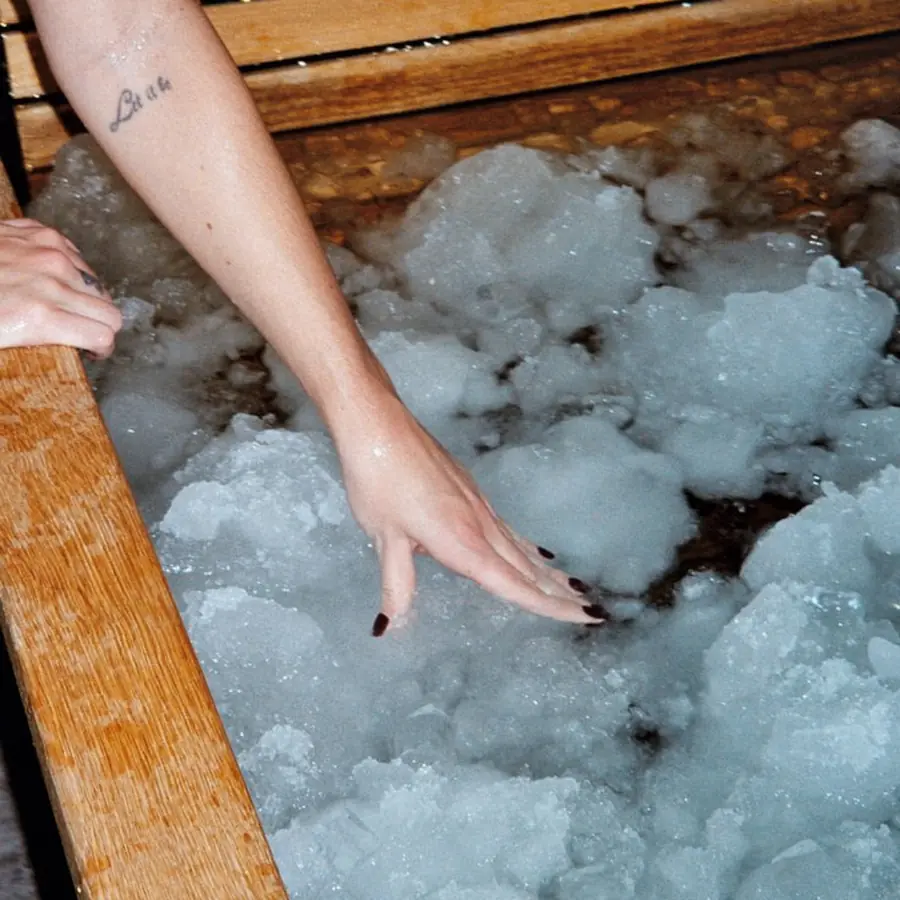
The cold is not comfortable. Let us be honest about that first. When you step into a plunge at around 50 degrees, your breath catches, your shoulders climb toward your ears, and a loud part of you wants out. That is the part people brace for. It is also the part that fools them, because for most people who practice cold immersion, the plunge itself is not the part they value. What they value is what comes after.
Here is what the research shows. In a study by Sramek and colleagues, published in the European Journal of Applied Physiology in 2000, researchers immersed participants in water at different temperatures and measured what changed in their blood. In cold water, dopamine, a molecule tied to motivation and focus, rose by about 250 percent. Noradrenaline, tied to alertness, rose by about 530 percent. Those numbers get quoted a lot, including on podcasts like Huberman Lab, but the study itself is the source, and it is worth being clear about what it did and did not measure.
What stood out was not just how far those levels rose. It was how they came back down. After cold exposure, dopamine appeared to decline gradually rather than dropping off quickly. That slow return may help explain why many people report feeling calm and focused for a while after a plunge, even though the plunge itself felt like a fight. The study measured chemistry in the blood, not mood, so "may help explain" is the honest phrasing. Still, the pattern lines up with what a lot of regular plungers describe.
This is the piece most people miss. They judge the cold by the ten seconds when it is hardest, decide it is not for them, and never find out that the part worth having arrives afterward. The cold was never asking to be enjoyed in the moment. It is a brief stress you choose on purpose, and for many people the payoff is the steadier hour that follows.
One more thing worth naming plainly. A cold plunge is a stress you fully control. You decide when to get in, how long to stay, and when to get out. Practicing that a few times a week is a low-stakes way to get more comfortable being uncomfortable. That is a practical skill, not a magic one, and it does not require you to suffer longer than a few minutes to work on it.
Now the caveats, because they matter. The Sramek study was small, and blood chemistry is not the same thing as how you feel. The 250 percent figure is a measurement from one protocol, not a promise about your morning. Cold immersion is also a real stressor, and it is not right for everyone. If you are pregnant, have a heart condition, or are managing blood pressure, talk to your doctor before you try it. Start short. Aim for cold enough to be uncomfortable, not punishing. Staying in longer has not been shown to add benefit, and it definitely adds misery.
That after-window shapes how we are designing Ritual Studio. The format is simple: sauna, cold plunge, then a real rest between rounds. Phones stay in a cubby so the clearest part of the session does not get interrupted. Most recovery spaces treat the rest as dead time. We think it is the point.
We are building this because we know exactly how hard it is to make recovery a consistent part of a full life. Rory works for CrossFit, Daniel is a firefighter, and we have two young kids. Ritual is for people carrying a similar load who want a realistic way to take care of themselves. Daniel's job is also why we offer a 10 percent Those Who Serve discount.
We are opening in University Place in early 2027. If you want opening updates, join the Founding Member Waitlist. The first 75 members get Founding Member Pricing. Follow along as the space comes together.