
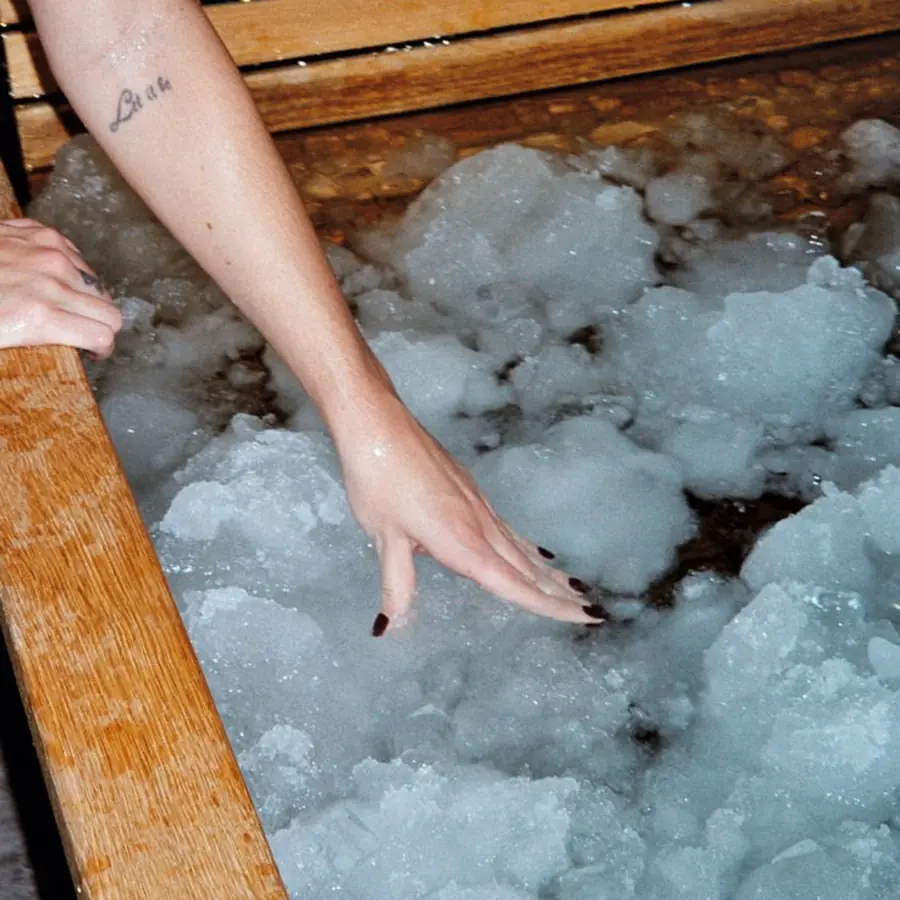
There is a moment right when you get into cold water where your body reacts before you get a vote. Your breath catches. Your heart rate jumps. Your shoulders climb toward your ears. Everything in you says the same thing at once: get out.
The practice is not the cold. The practice is what you do with your breath while your body is yelling. You slow your exhale, you drop your shoulders, and you stay a moment longer than the panic wants you to. That small choice is the whole point.
What the research actually says
The best summary of the evidence we know of is a 2022 review by Esperland, de Weerd, and Mercer in the International Journal of Circumpolar Health. The authors went through the published literature on voluntary cold-water exposure and worked from 104 relevant studies.
Two findings matter here. First, the cold shock response is real and measurable. Entering cold water triggers fast breathing, a gasp reflex, a spike in heart rate, and a release of stress hormones. Your nervous system reads cold water as a threat and responds accordingly.
Second, that response appears to shrink with repetition. Across the studies they reviewed, people who repeated cold exposure over time tended to show a smaller initial shock response. The gasp softens. The heart rate spike settles. Researchers call this habituation, and it happens at a level below conscious thought.
It is worth being precise about what that does and does not mean. The review does not prove that cold plunging makes you calmer in the rest of your life. It shows that your body's alarm response to one specific stressor can get smaller with practice. Andrew Huberman has also talked through deliberate cold exposure and stress on his podcast, and it is a reasonable place to hear these ideas discussed, but the published review above is the source we lean on.
Where we think it shows up
Think about the email that makes your stomach drop. The hard conversation you have been putting off. The kid melting down in the grocery store at exactly the wrong time. None of those are cold water, but they set off similar machinery: quick breath, tight chest, the urge to react fast.
We want to be careful here. No study we know of proves that calm practiced in a plunge transfers to a stressful Tuesday. What you do get is direct experience. Proof, in your own body, that you can feel the alarm go off and still choose a slow exhale. For a lot of people that experience is useful on its own. We just will not promise more than the evidence supports.
The honest caveat
The Esperland review is careful, so we will be too. The authors describe the health effects of cold water as a continuing subject of debate. The findings are promising, not settled, and cold shock is a genuine hazard, not a dare. If you have a heart condition or are pregnant, talk to your doctor before trying cold exposure. Short, controlled sessions are the goal. Ease in, breathe, get out before you are miserable. Nobody needs a personal record.
Why this one matters to us
Rory works for CrossFit. Daniel is a firefighter who used to play professional water polo. Between two demanding jobs and two young kids, we know exactly how hard it is to make recovery part of a normal week. Daniel's job is also why that first jolt of stress, and what you do in the second after it, is not abstract for us. Firefighters have to stay functional while the alarm is going off. The rest of us can practice a smaller version of the same skill.
That is what Ritual is for. We are building a contrast therapy studio centered around sauna, cold plunge, and making recovery a consistent part of real life, for busy people who carry a lot. First responders and military receive 10 percent off through our Those Who Serve discount.
Ritual is coming to University Place, opening in early 2027. The first 75 members get Founding Member Pricing. Join the Founding Member Waitlist for opening updates, or just follow along as the space comes together.
Sources: