
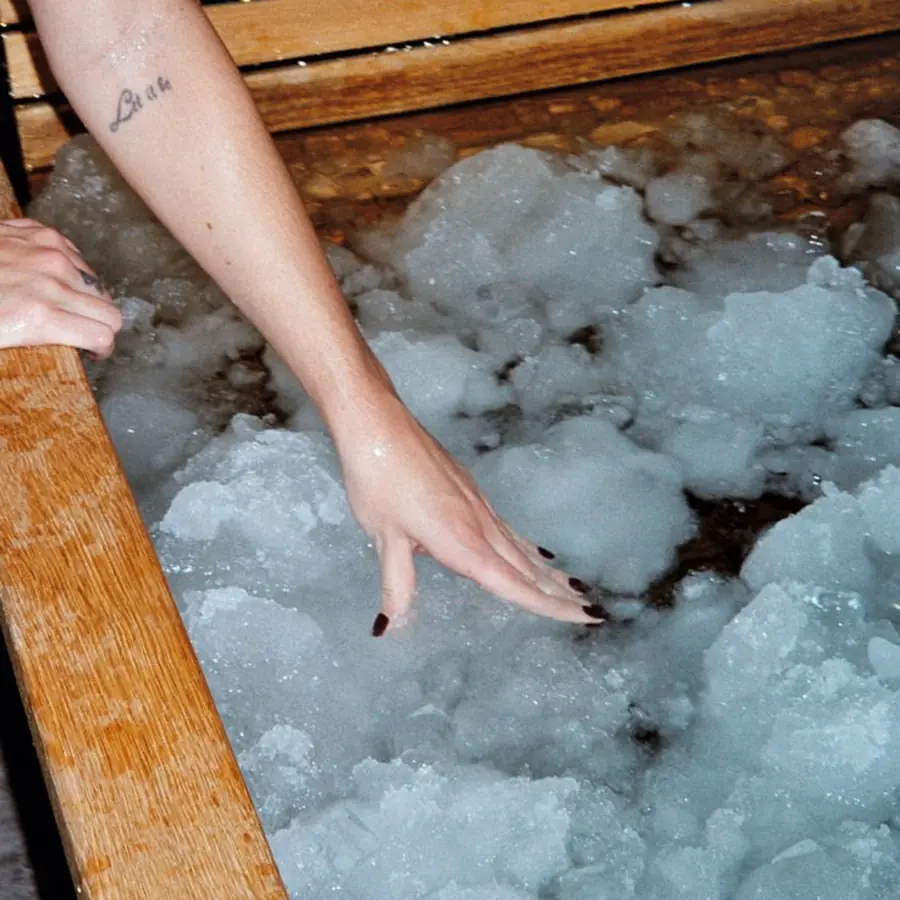
We give one small instruction to almost everyone before their first contrast round. When you finish, finish in the cold. Sit in the heat, let it do its work, and then let a short cold plunge be the last thing you do before you dry off and head out.
People ask why. It is a fair question. The heat feels like the reward and the cold feels like the tax, so why end on the hard part?
The short answer is a type of tissue called brown fat, and the clearest evidence we have comes from a 2021 study by Susanna Soberg and her colleagues, published in Cell Reports Medicine.
First, the background. Most of the fat we carry is white fat. It stores energy and mostly sits there. Brown fat is different. It is packed with mitochondria, and its job is to burn energy to make heat. Babies have a lot of it, which is how they stay warm before they can shiver. For a long time researchers assumed adults lost it. It turns out we keep some, and cold exposure is one of the things that activates it.
In the Soberg study, young men who swam in cold water through the Scandinavian winter and warmed up in a sauna afterward, two or three times a week, were compared with men who did not. When the swimmers were cooled in the lab, they produced far more of their own heat than the control group. Their cold induced thermogenesis was measurably higher. In plain terms, their bodies looked better trained at the exact thing they kept practicing.
Now the honest catch, because there is always one and we would rather you hear it from us. The study was small, and the participants were young, healthy men who were already deep into a winter swimming habit. It does not prove the same results will show up for a fifty year old firefighter after a night shift, or for a parent who finally found ten quiet minutes. It is a signal, not a promise. What it suggests is that regular cold exposure, finished on cold, may help the body get better at handling cold over time. May. Not will. That is as far as we are comfortable taking it.
There is a second reason we like ending on cold, and it is about how many people feel afterward. A small study by Sramek and colleagues, published in the European Journal of Applied Physiology in 2000, found that immersion in cool water raised circulating dopamine and noradrenaline, and the levels stayed elevated after people got out. Andrew Huberman has discussed this line of research on his podcast, which is where a lot of people first heard about it. The same caution applies here. It was a small study under lab conditions, and how closely it maps to a two minute plunge at a studio is not settled. Still, it fits what cold water swimmers have reported for years: a clear, awake, steady feeling on the way out. When cold is your last step, that is the feeling you leave with. When heat is your last step, most people leave relaxed and a little sleepy. Both are fine. We just think the first one fits the middle of a busy day better.
So we ask you to end on cold not to make the session harder, but because the research we have, limited as it is, connects that last cold minute to both the adaptation and the clear headed feeling people describe on the way out.
This one is personal for us. Ritual is being built by Rory and Daniel. Rory works for CrossFit. Daniel is a firefighter who used to play professional water polo. Between two demanding jobs and two young kids, we know how hard it is to make recovery a normal part of the week, and we are building the studio for people in the same spot. Daniel's job is also why we offer a Those Who Serve discount of 10 percent for first responders and others who serve their communities.
Ritual Studio is coming to University Place, opening in early 2027. The first 75 members get Founding Member Pricing. If ending on cold sounds like your kind of hard thing, join the Founding Member Waitlist for opening updates, and follow along as the space comes together.
Sources:- Soberg S, et al. Altered brown fat thermoregulation and enhanced cold-induced thermogenesis in young, healthy, winter-swimming men. Cell Reports Medicine. 2021. link
- Sramek P, et al. Human physiological responses to immersion into water of different temperatures. European Journal of Applied Physiology. 2000. link
- Huberman Lab (secondary reference). Using Deliberate Cold Exposure for Health and Performance. link